Guide
5 Essential Benefits of Parking Lot Re-Striping and Sealcoating You Need to Know
Re-striping and sealcoating are two halves of one preventive-maintenance habit that keeps a commercial lot safe, compliant, and out of the repaving cycle. Here are five reasons to put them on the calendar.
Your parking lot is the first thing a customer, tenant, or inspector sees, and it is working or failing long before anyone reaches your front door. Faded stall lines, cracked asphalt, and worn markings make a well-run property look neglected, and they create real safety and liability problems that land on whoever manages the site.
Parking lot re-striping and sealcoating are the two halves of keeping that first impression sharp. Re-striping repaints the lines, arrows, accessible stalls, and fire lanes that tell drivers where to go. Sealcoating lays down a protective layer that shields the asphalt itself from sun, water, and traffic. Done on a regular schedule, together they are one of the simplest forms of preventive maintenance a property owner or manager can plan for.
Here are five benefits that make re-striping and sealcoating worth putting on the calendar instead of putting off.
Benefit 1: Enhanced Safety for Drivers and Pedestrians
The first job of a parking lot is to move people and cars through it without anyone getting hurt. Clear markings and sound pavement are what make that happen, and both wear down over time.
Importance of Clear Markings
Stall lines, directional arrows, stop bars, crosswalks, fire lanes, and accessible stalls tell drivers and pedestrians where to go and where not to. When those marks fade, drivers hesitate, park at angles, block lanes, and roll through crosswalks they can no longer see. In a commercial lot with steady traffic, that confusion is how fender benders and pedestrian near-misses happen, and the property owner is usually the one holding the liability. Fresh, high-visibility parking lot striping removes the guesswork and keeps traffic flowing the way the lot was designed to.
Preventive Maintenance Practices
Markings do not fail all at once. They fade gradually under sun, rain, and tire wear until one day they are hard to read in low light or wet weather. Instead of waiting for a complaint or an incident, treat re-striping as scheduled preventive maintenance. Most commercial lots need a fresh re-stripe every 18 months to 3 years depending on traffic, and a quick walk of the property twice a year will tell you when lines, arrows, and ADA markings are getting thin. Catching it on a schedule is always cheaper and safer than reacting to a problem after it happens.
Benefit 2: Improved Aesthetic Appeal
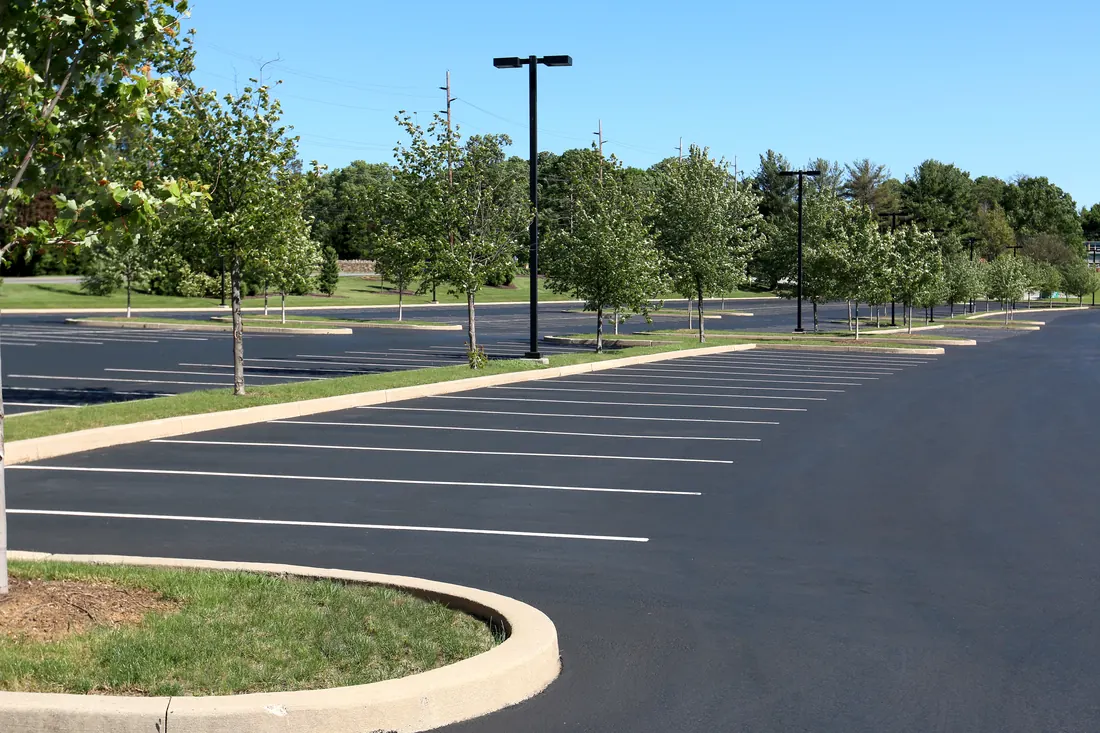
A parking lot sets the tone for the whole property before anyone walks inside. Dark, even asphalt with bright, straight lines reads as clean and cared for. Gray, oxidized pavement with faded lines reads as neglected, no matter how nice the building behind it is.
Curb Painting Considerations
Striping is more than stall lines. Curb painting and curb markings do real work: red for fire lanes and no-parking zones, yellow for loading and caution areas, and blue for accessible parking. Fresh curb paint sharpens the look of the lot and reinforces the rules at the same time. Because curbs take direct sun and the scuff of tires and shoes, they tend to fade faster than the field of the lot, so they are worth refreshing on the same visit as a re-stripe.
First Impressions Matter
For a retail center, medical office, church, or any property that depends on foot traffic, the lot is the first and last thing a visitor experiences. A sharp lot signals that the property is well managed, which builds confidence with customers, tenants, and prospective buyers. Sealcoating restores that deep black finish and striping brings back the crisp contrast. Together they make a property look recently updated for a fraction of what any other exterior improvement would cost.
Benefit 3: Extended Longevity of Asphalt
Re-striping keeps the surface usable, but sealcoating is what protects the asphalt underneath. This is where the real money is saved, because asphalt is expensive to replace and far cheaper to maintain.
Role of Asphalt Maintenance
Asphalt is held together by a binder that sun, water, and oxygen slowly break down. UV light and oxidation make the surface brittle and gray, and water works into small cracks, softens the base, and turns a hairline crack into a pothole. Regular asphalt maintenance slows this down. Crack filling keeps water out of the pavement structure, and sealcoating adds a protective top layer that blocks UV and seals the surface against water and oil. Skipping these steps does not save money, it just moves the cost forward to a bigger repair.
Use of High-Quality Asphalt Sealant
A quality asphalt sealant does three jobs at once: it shields the surface from UV, it resists water and automotive fluids, and it restores the deep black finish. Most commercial lots benefit from a reseal every 2 to 3 years, with high-traffic lots on the shorter end of that range. Modern sealers are typically asphalt-emulsion based, and some Texas cities, including Austin, restrict coal-tar sealers, so it is worth confirming the product used meets local rules. Applied on schedule alongside timely crack repair, sealcoating can add years of life to a lot before it needs the much larger expense of repaving.
Benefit 4: Compliance with Local Regulations
Commercial lots carry legal requirements that a home driveway never deals with, and most of them are enforced through the markings on the pavement. Keeping those markings fresh is how a property stays compliant.
Understanding Local Requirements
The Americans with Disabilities Act (ADA) sets requirements for the number, size, and placement of accessible stalls, the striped access aisles next to them, and the signage that marks them. Fire codes govern how fire lanes are marked and how wide they must be. Local ordinances can add their own rules for loading zones, no-parking areas, and signage. The exact counts and dimensions depend on the size and use of the lot, so it pays to work with a striping contractor who lays out ADA and fire-lane markings to code rather than guessing at them.
The Importance of Regular Maintenance
Compliance is not a one-time event. An accessible stall with a faded symbol, a worn access aisle, or an unreadable fire lane can put a property out of compliance even though it was correct the day it was painted. That exposes the owner to complaints, failed inspections, and in some cases fines or legal action. Regular re-striping keeps the required markings sharp and legible, which is the simplest way to stay on the right side of the rules and avoid a problem that is completely preventable.
Benefit 5: Cost-Effective Property Management Strategy
Everything above adds up to one thing for a property manager: re-striping and sealcoating are among the highest-return maintenance dollars you can spend, because they protect a much larger asset for a small, predictable cost.
Budgeting for Re-Striping and Sealcoating
Re-striping and sealcoating are small line items that fit cleanly into an annual maintenance budget. Repaving is the opposite: a large capital expense that usually arrives as an emergency once the damage is done. Planning the work on a cycle, a re-stripe every 18 months to 3 years and a reseal every 2 to 3 years, lets you spread the cost over time, schedule around tenants and business hours, and skip the premium that comes with rushed, reactive repairs.
Long-Term Savings Through Preventive Maintenance
This is the heart of preventive maintenance: a modest amount spent on a schedule protects a far more valuable asset. Sealcoating costs a small fraction of what it costs to repave the same square footage, and every reseal and crack repair pushes the repaving date further out. A lot that is sealed and striped on schedule can last significantly longer than one left to weather on its own. For a property manager watching a budget, that is the difference between a manageable recurring cost and a five- or six-figure replacement project landing all at once.
Put Your Lot on a Maintenance Schedule
Re-striping and sealcoating are not cosmetic extras. Together they keep your lot safe, compliant, and good-looking, and they keep it out of the repaving cycle for as long as possible, all for a predictable cost you can plan around.
Texmark Pavement provides commercial parking lot striping, ADA compliance marking, and sealcoating across Central Texas, including Georgetown, Round Rock, Cedar Park, Leander, and Austin. If your lines are fading or your asphalt is turning gray, we can meet you at your lot and give you a straight quote, or quote from photos and measurements if that is easier. Get a free estimate from Texmark Pavement and put your parking lot back on a schedule that protects it.
Free Estimate
Get Your Free Parking Lot Estimate
Tell us about your lot and we'll email a price back to you within one business day.