
What We Do
Parking Lot Striping & Sealcoating
A well-striped parking lot does more than make fresh asphalt look finished. It supports safer movement, clearer traffic flow, better use of space, and a cleaner first look for customers, tenants, staff, and visitors. When paired with asphalt sealcoating and steady pavement maintenance, striping helps protect both the look and use of a commercial lot.
Parking Lot Striping
New construction layout and full restriping for faded lots. Correct spacing, clean edges, laid out to code.
Learn MoreADA Compliance Marking
Accessible stalls, van accessible spaces, and required signage placed to meet Texas accessibility standards.
Learn MoreSealcoating
A protective coat that shields asphalt from sun and traffic wear, extending the life of your lot before it needs repaving.
Learn MoreFor owners and managers, the goal is simple: make the lot easy to read the moment someone drives in. Clear lines, arrows, crosswalks, accessible spaces, stop bars, and loading zones cut confusion and help the lot work as planned.
Why does professional parking lot striping matter?
Professional parking lot striping turns open pavement into an ordered, safer traffic system. Without clear markings, drivers guess where to park, pedestrians cross wherever they can, and busy areas get harder to manage. Good striping gives each user a clear path from the entrance to the door.
Striping also protects other parking lot maintenance work. If a property owner invests in asphalt sealcoating, crack repair, or resurfacing, faded lines can make the lot look unfinished. Fresh, accurate pavement striping brings back visibility after sealcoating and helps the whole surface feel cared for.
Just as important, professional striping is not only about repainting old lines. A qualified contractor checks spacing, traffic paths, accessible routes, pedestrian movement, curb zones, and the asphalt itself. That broader view helps the lot support daily use instead of just looking better for a short time.
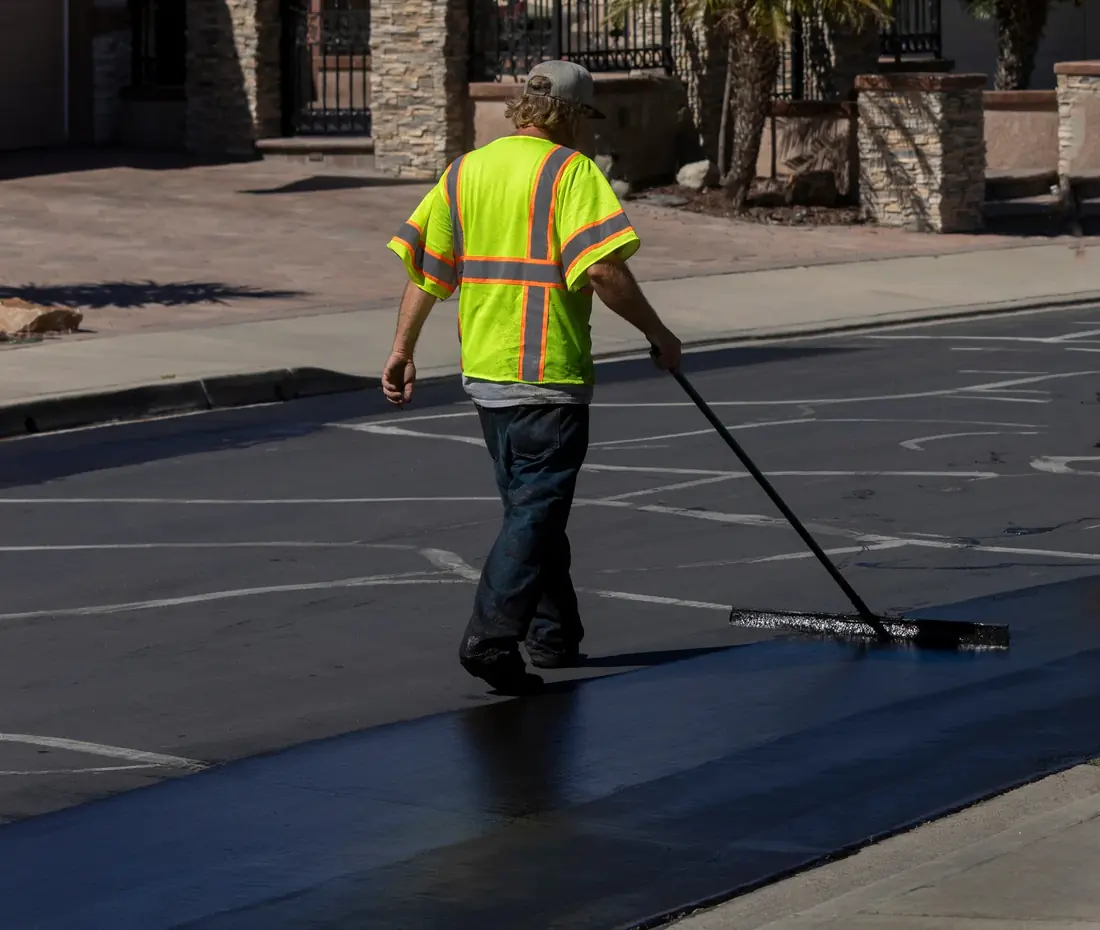
Striping completes the value of asphalt sealcoating
Asphalt sealcoating helps protect pavement from sun, water, fluids, and daily traffic. Once a sealcoat is down, old lines are often covered or harder to see. That makes parking lot striping the next step in the work.
The order matters. Surface repairs should come first, followed by cleaning, sealcoating services, cure time, and then asphalt striping. Rushing can hurt paint bond, line sharpness, and the life of the markings. A pro crew knows the best results come from proper prep, not from speed.
This order also helps owners avoid doing the same job twice. If striping is done before sealcoating, the new lines may be covered soon after. When sealcoating and pavement striping are planned together, the lot can be protected, marked, and reopened with less delay.
A smart maintenance plan often includes:
- Inspection before work begins: Find cracks, potholes, drain issues, faded marks, and layout problems.
- Surface cleaning: Remove dirt, loose debris, oil, and other material that can hurt coating or paint.
- Asphalt repairs where needed: Fix damaged spots before sealing or striping so the surface works better.
- Sealcoating application: Protect and refresh the asphalt as part of broader pavement maintenance.
- Final striping and markings: Restore stalls, arrows, stop bars, crosswalks, ADA spaces, fire lanes, and loading zones.
Handled in this order, the work supports both appearance and long-term use.
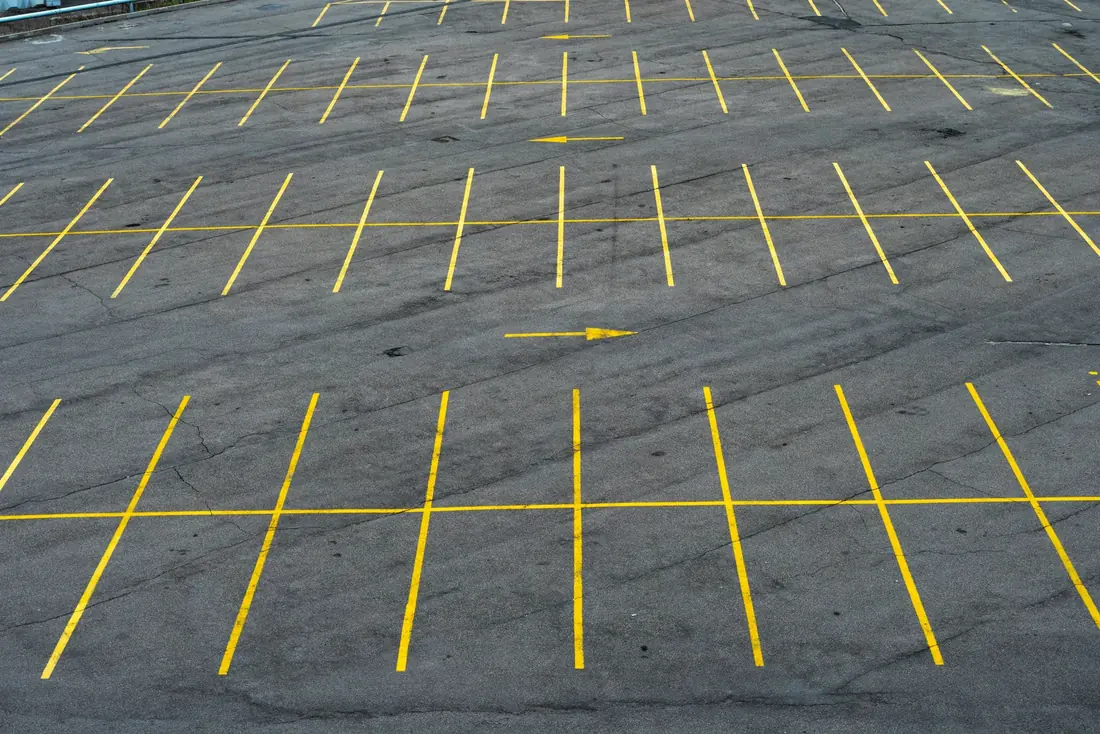
Clear markings improve traffic flow and parking efficiency
A parking lot should feel easy to read. Drivers should know where to enter, where to stop, which way to go, and where spaces begin and end. When lines fade, even familiar lots feel less predictable, especially at peak times, in bad weather, or at night.
Professional striping improves traffic flow by creating a clear path through the property. Directional arrows, lane markings, stop bars, and no-parking zones reduce hesitation and sudden moves. In busy commercial lots, that clarity can make the difference between smooth circulation and constant backups near entrances, drive-through lanes, loading areas, or pedestrian crossings.
It also helps make the most of parking space. Uneven stall widths, crooked lines, and poor layout can waste room or push drivers to park over the lines. A professional striping contractor can help keep spacing even and, when needed, suggest layout changes that improve how the lot works.
For many sites, better order helps several users at once:
- Customers find open spaces faster and feel less stress.
- Employees have clearer spaces for parking, deliveries, or service.
- Vendors can spot loading zones without blocking main traffic lanes.
- Pedestrians see safer walk paths across busy pavement.
- Emergency access areas stay more visible and easier to keep open.
These details may seem small, but together they make the parking experience easier and safer from arrival to exit.
How does striping support safety and compliance?
Striping supports safety and compliance by making rules visible right on the pavement. Properly marked accessible spaces, access aisles, crosswalks, fire lanes, stop bars, directional arrows, and walk paths help guide behavior and cut avoidable confusion. Clear markings also support compliance work tied to access and traffic control, including ADA and MUTCD-based layouts where needed.
Compliance is one of the biggest reasons to use professional pavement striping instead of a casual DIY job. Accessible spaces are not just regular stalls with a symbol added. They often need the right size, access aisles, placement near accessible routes, and clear marks drivers can read. Fire lanes, loading zones, and no-parking areas may also need to meet local rules.
Poor striping can lead to real problems. If markings are unclear or wrong, owners may face complaints, citations, or the cost of rework. More important, confusing pavement markings can raise risk where vehicles and pedestrians mix.
Professional contractors bring a broad view of how markings work together. A crosswalk should lead to a walkway or entrance. A stop bar should sit where drivers need to pause before a conflict point. Arrows should match the real traffic flow, not create doubt. That planning makes the lot easier to use and easier to read.
Professional asphalt striping delivers cleaner, longer-lasting results
There is a clear difference between professional asphalt striping and rushed, uneven line painting. Straight lines, sharp edges, even widths, and exact measurements all shape how the final lot looks and works. Clean stripes show care; crooked or blotchy stripes can make even newly sealed asphalt look neglected.
Pros usually use striping gear, the right paint, layout tools, and good prep methods. Tool quality matters because it helps produce even line thickness and cuts problems like overspray, waviness, and uneven coverage. The right materials matter too, since a busy retail lot, apartment site, office park, or industrial yard may have different traffic needs.
Prep is often the hidden key to long life. Paint sticks better to a clean, dry, fully cured surface. If the pavement is dusty, damp, oily, or still curing after sealcoating, the marks may wear out early. Professional crews pay attention to weather, surface state, and timing so the finished striping has the best chance to hold up under traffic.
Professional striping also cuts disruption. Experienced crews can phase work, block off sections, and plan around business hours when possible. While every property is different, a coordinated plan helps limit confusion for tenants, customers, staff, and visitors.
Better curb appeal starts in the parking lot
The parking lot is often the first part of a property people see. Before a customer sees a storefront, lobby, office, clinic, restaurant, or apartment entrance, they see the pavement. Fresh parking lot striping sends a simple message: this property is organized, maintained, and ready for guests.
Curb appeal is not only about looks. A clean, easy-to-read lot can shape how comfortable people feel when they enter. If the parking area looks neglected, visitors may wonder if the same lack of care extends to the building, service, or management. On the other hand, crisp striping and well-kept asphalt can build trust before anyone walks inside.
This matters most for sites with steady public traffic, such as shopping centers, schools, medical offices, churches, restaurants, hotels, and multiunit communities. These lots need to serve people who may not know the layout. Clear marks cut guesswork and make the site feel more open and welcoming.
What should you look for in a professional striping contractor?
Look for a contractor who treats striping as part of a full parking lot maintenance plan, not just a quick paint job. The right provider should understand layout, surface prep, asphalt sealcoating timing, traffic control, access markings, and the real needs of your property. They should also be able to explain their process in plain language before work starts.
A reliable contractor will ask how the lot is used. Does traffic back up at certain times? Are delivery vehicles blocking customer spaces? Are pedestrians crossing drive lanes because crosswalks are missing or faded? These questions help show whether the current layout should simply be refreshed or improved.
Before you hire, check whether the contractor provides:
- A clear site review that looks at current markings, pavement condition, traffic flow, and problem spots.
- Good prep including cleaning, layout measurement, and coordination with sealcoating or repairs.
- The right materials and equipment for clean, durable, visible lines.
- Knowledge of needed markings such as accessible spaces, access aisles, fire lanes, arrows, and walk crossings.
- Scheduling updates so tenants, customers, and employees know what to expect.
- A maintenance mindset that sees striping as part of long-term pavement care.
The best results come from planning, not guesswork. A professional should help you see what needs repainting, what may need to change, and how to protect the finished work.
Parking lot striping is a small detail with a large impact
Parking lot striping may seem like a finish step, but it plays a major role in safety, order, compliance, curb appeal, and long-term pavement maintenance. When paired with asphalt sealcoating and other sealcoating services, it helps restore both the surface and the flow of the lot.
For owners and managers, professional pavement striping is an investment in clarity. It helps drivers park the right way, pedestrians move more safely, and businesses present a cleaner, more organized front. If your lines are faded, confusing, or missing after recent asphalt work, scheduling professional striping is one of the most useful ways to bring the lot back into shape. For help with parking lot striping, asphalt sealcoating, or other pavement maintenance, Texmark Pavement can plan the work in the right order.
Related: Parking lot striping for property managers and HOAs · 5 Essential Benefits of Parking Lot Re-Striping and Sealcoating
Not Sure What You Need
Send Us Your Lot, We'll Tell You What It Needs
Call, email, or send photos of your lot. We'll walk you through what makes sense and give you a straight quote.
Free Estimate
Get Your Free Parking Lot Estimate
Tell us about your lot and we'll email a price back to you within one business day.